Longevity in Singapore: Evidence-Based Habits for Healthy Ageing
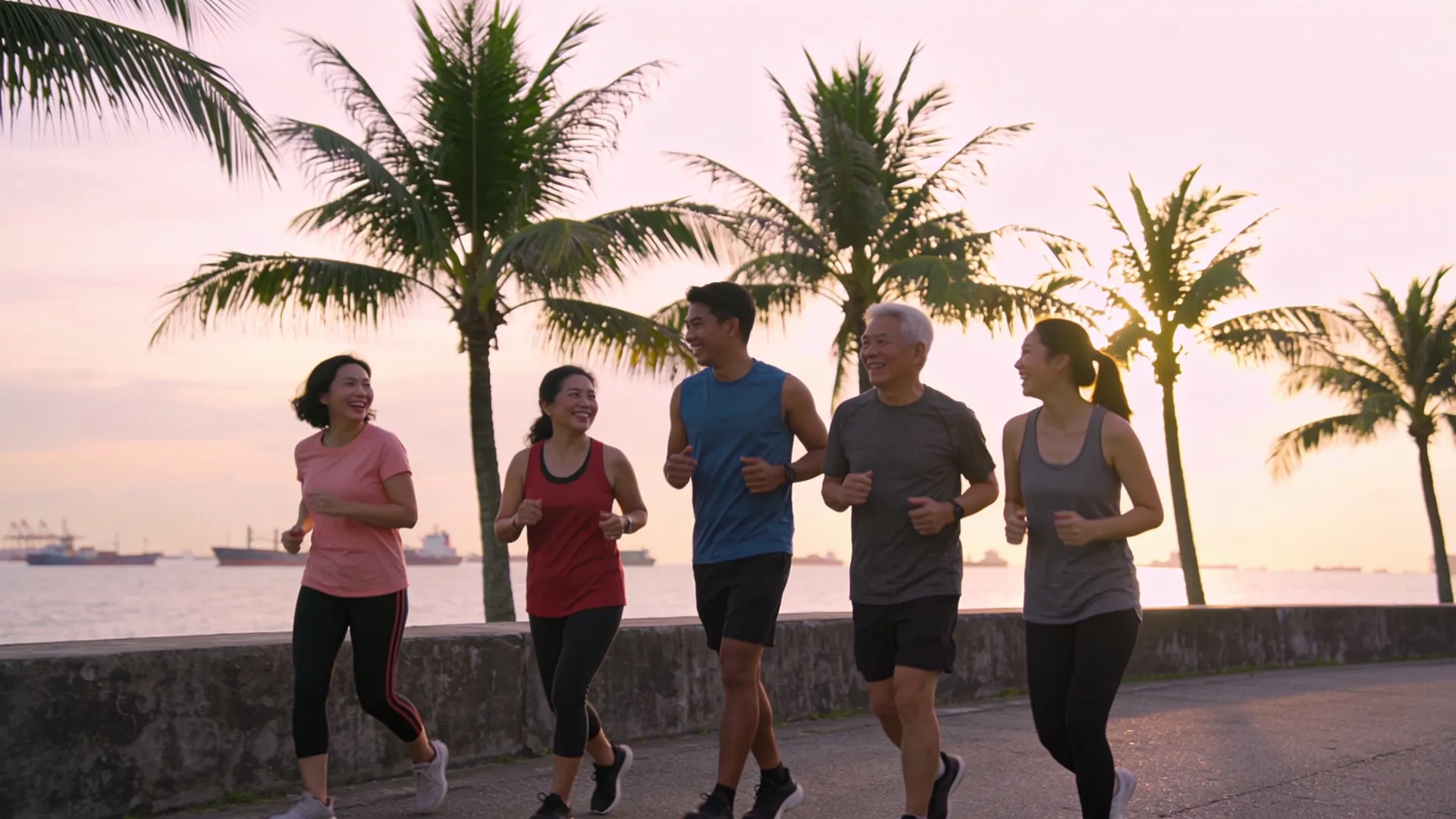
The most reliable longevity habits in Singapore are the unglamorous ones: move most days, include strength work twice a week, sleep at least seven hours, eat a plate that is half fruit and vegetables, and stay meaningfully connected to other people. Research consistently points to these basics, especially social connection, long before any supplement or gadget.
Why longevity is a Singapore conversation
Singapore residents' life expectancy at birth was 83.9 years in 2025, according to the Department of Statistics. Living longer is one thing; the question more people are asking is how to stay healthy, independent and engaged for those extra years.
Local researchers are working on exactly that. The NUS Healthy Longevity Translational Research Programme at the Yong Loo Lin School of Medicine was formally set up in April 2021 and is led by Professor Brian Kennedy. Its motto is "We investigate how and why we age so we can change the narrative on ageing", and its work includes measuring biological ageing with biomarkers and looking for ways to extend healthy years.
This guide sticks to well-established basics from national guidelines and peer-reviewed research. It is general information, not medical advice. If you have a health condition, or are starting something new, talk to your own doctor.
Move, and include strength
The Singapore Physical Activity Guidelines were released in June 2022 by Sport Singapore and the Health Promotion Board. For adults aged 18 to 64, they recommend:
- At least 150 to 300 minutes a week of moderate-intensity aerobic activity, such as brisk walking, cycling or an easy run.
- Muscle, bone and joint strengthening on at least two days a week, at moderate or vigorous intensity.
- Less time sitting. The guidelines put real emphasis on reducing sedentary behaviour.
In practical terms, that might be a brisk 30-minute walk on five days, plus two short strength sessions using bodyweight, resistance bands or a park fitness corner. HPB's Healthy 365 app, used for the National Steps Challenge, is one way to log steps and activity.
Protect your sleep
HealthHub advises adults to aim for at least seven hours of sleep a day. Its practical tips are worth repeating because they are simple and free:
- Keep regular sleep and wake times, including at weekends.
- Limit screens for about 30 minutes before bed.
- Avoid caffeine and alcohol at night.
- Keep your bedroom dark and quiet, with thick curtains, an eye mask or earplugs.
- Keep naps short and early, or skip them.
- If you cannot fall asleep after about 20 minutes, get up and do something calming until you feel drowsy.
Eat the My Healthy Plate way
HPB's My Healthy Plate uses a quarter, quarter, half model: a quarter of the plate wholegrains, a quarter good sources of protein, and half fruit and vegetables. It suggests making water your drink of choice, picking drinks with less or no sugar, and choosing oils lower in saturated fat, such as canola, soy and olive oil.
None of this means giving up hawker food. Asking for extra vegetables, choosing brown rice where it is offered and ordering drinks with less sugar are small changes you can make at any stall.
Do not underestimate social connection
This is the habit people most often overlook, and the evidence is strong.
- A 2010 meta-analysis in PLoS Medicine pooled 148 studies covering 308,849 people. Those with stronger social relationships had about 50% higher odds of survival over the study periods, and the authors judged the effect comparable with quitting smoking.
- A 2015 meta-analysis by the same lead researcher found that social isolation, loneliness and living alone were linked to an average 29%, 26% and 32% higher likelihood of death respectively.
- In June 2025, the WHO Commission on Social Connection reported that 1 in 6 people worldwide is affected by loneliness, and linked loneliness to more than 871,000 deaths a year, or about 100 every hour.
These studies show associations, not a guarantee, and they do not mean you must become a social butterfly. They do suggest that regular, meaningful contact with other people belongs on the same list as exercise and sleep.
Find your healthy ageing community
The best routines combine movement, purpose and people. Some local options:
- Community gardens. Over 1,900 community gardens have been set up across Singapore under NParks' Community in Bloom programme, run by residents, volunteers, schools and organisations.
- Walking and running groups. ActiveSG Circle notes that activity groups hold weekly walks and runs at East Coast Park. Our guide to running groups in Singapore lists free clubs and routes.
- Community club interest groups. The People's Association has more than 100 community clubs, and onePA lists their classes and groups, from dance to cooking.
- Reading and learning. A book club or a regular talk gives your brain a workout and your week a fixed point. See our guide to book clubs in Singapore.
Pick something that meets regularly and that you would enjoy anyway. Consistency matters more than intensity.
Talk ideas with like-minded people
Longevity attracts a lot of noise online, from miracle products to extreme routines. A good antidote is talking it through with thoughtful people: comparing what has actually helped, sharing research you have read, and keeping each other going.
On Now I'm Open, a new web app launching from Singapore, you can post an Ideas card such as "Open to a kopi chat about healthy ageing research, Kent Ridge, Sat am", or a Friends card like "Open to a weekly brisk walk, Bishan, early mornings". Visibility is mutual and opt-in, location only ever shows at area level, and a chat opens only when both people say yes.
If you ever feel that loneliness is weighing on your mood, our guide to feeling lonely in Singapore has practical first steps and places to get support.
Questions people ask
How much exercise do adults need for healthy ageing in Singapore?
The Singapore Physical Activity Guidelines, released in 2022 by Sport Singapore and the Health Promotion Board, recommend that adults aged 18 to 64 do at least 150 to 300 minutes of moderate-intensity aerobic activity a week, strengthen muscles, bones and joints on at least two days a week, and cut down on time spent sitting.
How much sleep should adults get?
HealthHub advises adults to aim for at least seven hours of sleep a day. Helpful habits include keeping regular sleep and wake times, limiting screens for about 30 minutes before bed, avoiding caffeine and alcohol at night, and keeping your bedroom dark and quiet. If you cannot sleep after about 20 minutes, get up and do something calming.
Does social connection really affect how long you live?
Research suggests it does. A 2010 meta-analysis of 148 studies and more than 300,000 people found that people with stronger social relationships had about 50% higher odds of survival over the study periods. The authors judged the effect comparable with quitting smoking. The WHO links loneliness to more than 871,000 deaths a year worldwide.
What is the healthiest way to eat according to Singapore guidelines?
The Health Promotion Board's My Healthy Plate suggests filling half your plate with fruit and vegetables, a quarter with wholegrains and a quarter with good sources of protein. It recommends water as your drink of choice and oils lower in saturated fat, such as canola, soy and olive oil, while limiting saturated and trans fats.
Where can I find healthy ageing communities in Singapore?
Look for regular, social activities near home: community club interest groups on onePA, one of the more than 1,900 community gardens set up under NParks' Community in Bloom programme, weekly walking or running groups in parks such as East Coast Park, or a volunteering role on Giving.sg. The regular contact matters as much as the activity.
Sources
- SingStat: Death and life expectancy, latest data
- NUS Medicine: Healthy Longevity Translational Research Programme, About Us
- ActiveSG Circle: New Singapore Physical Activity Guidelines
- HealthHub (MindSG): Sleeping well
- HealthHub: My Healthy Plate
- Holt-Lunstad, Smith and Layton (2010): Social relationships and mortality risk, a meta-analytic review. PLoS Medicine
- Holt-Lunstad et al. (2015): Loneliness and social isolation as risk factors for mortality. Perspectives on Psychological Science (PubMed)
- WHO: Social connection linked to improved health and reduced risk of early death (30 June 2025)
- MND: Written answer on community gardens (January 2024)
- ActiveSG Circle: Running routes in Singapore
- onePA: About Us (People's Association)
- Smart Nation: National Steps Challenge and Healthy 365 app
More guides
- Apps to make friends: an honest comparisonAn honest look at apps to make friends as an adult, from BFF by Bumble and Meetup to Timeleft and Peanut: what each is good for and what to watch for.
- Book Clubs in Singapore: Where to Find Your Reading PeopleFind a book club in Singapore: Silent Book Club sessions, free NLB library clubs in four languages, independent clubs, the Writers Festival and DIY tips.
- Dating apps in Singapore: an honest 2026 comparisonTinder, Bumble, Hinge, Coffee Meets Bagel and more, compared for Singapore: how matching works, verification and indicative SGD prices.
- Dinner with strangers in Singapore: social dining, supper clubs and how to do it safelyHow to have dinner with strangers in Singapore: Timeleft, supper clubs with communal tables, home dining, Meetup groups and doing it yourself safely.
- Feeling lonely in Singapore: what helps, and where to find supportFeeling lonely in Singapore is more common than it looks. What the local data says, small steps that help, and helplines like SOS 1767 and mindline 1771.
- First Date Ideas in Singapore That Are Easy on EveryoneGood first date ideas in Singapore that are safe, low-cost and low-pressure: hawker dinners, garden walks, free light shows, museums and Pulau Ubin.