How to make friends in your 30s in Singapore
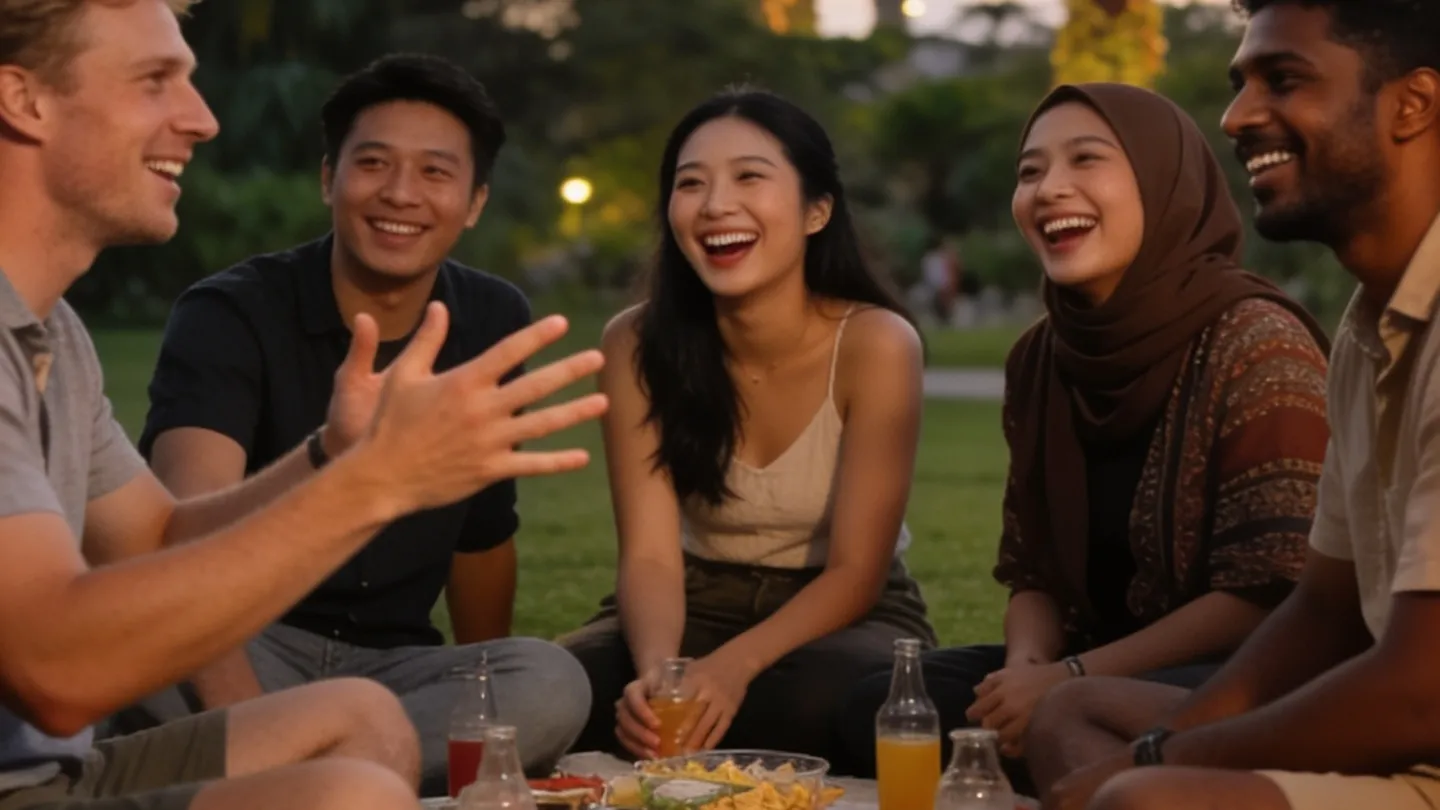
Making friends in your 30s in Singapore works best when you stop waiting for friendships to happen and build in repetition: one or two regular activities, a few specific invitations, and follow-up within a week. Friendship takes time, roughly 50 hours to go from acquaintance to casual friend, so the trick is to find settings where those hours add up without much effort.
Why it feels harder in your 30s
In school and university, friendship came with a timetable. You saw the same people every day without trying. By your 30s, that structure has usually gone. Colleagues change jobs, friends get married or move overseas, and weekends fill up with family, errands and recovery from the working week.
The numbers reflect this life stage. In 2025, the median age at first marriage in Singapore was 31.1 for grooms and 29.6 for brides, so many people are settling into new households right as their old social routines loosen. Friends who become parents often disappear for a while, through no fault of anyone.
You are also not alone in finding it hard. An Institute of Policy Studies poll of 2,356 citizens and permanent residents, run in late 2023, found that those aged 21 to 34 had the highest loneliness scores of the groups surveyed. Some 56% of that group said they sometimes feel anxious talking to people in person, compared with 43% of those aged 35 to 49. IPS was careful to say the poll did not cover people over 64, so it cannot prove young adults are the loneliest overall. But it does suggest that plenty of people around you are quietly looking for company too.
If loneliness is weighing on you, our guide to feeling lonely in Singapore covers support options as well as social ones.
The maths of friendship
Communication researcher Jeffrey Hall at the University of Kansas estimated how long it takes to turn a stranger into a friend:
- About 50 hours together to go from acquaintance to casual friend
- About 90 hours to become friends
- More than 200 hours to become close friends
He also found that the kind of time matters. Hanging out, chatting and joking around counted for much more than hours spent working alongside someone. That is why a colleague you have sat next to for three years can still feel like an acquaintance.
The practical lesson: one great conversation is a start, not a friendship. You need settings where you see the same people again and again.
Seven ways that actually work in Singapore
1. Choose one thing that repeats
A weekly activity does the scheduling for you. Good options include a run club, a book club, or a social badminton session at your community club. ActiveSG badminton courts start at S$3.50 an hour off-peak for citizens and PRs, which makes a regular game cheap to keep up. Our guide to badminton and table tennis partners covers booking.
Go at least four or five times before judging it. Familiar faces only start to feel like friends after a few sessions.
2. Try group formats that welcome people who come alone
Meetup lists Singapore groups for hiking, board games, live music, networking and simply meeting new people. Timeleft runs group dinners in Singapore on Wednesdays and Fridays at 7pm, with drinks on Thursdays and coffee on Saturday afternoons, matching groups through a short personality test. Both suit people who would rather not organise anything themselves. For more ideas, see dinner with strangers in Singapore.
3. Volunteer
Volunteering gives you a shared purpose and something to talk about. Giving.sg, run by the National Volunteer and Philanthropy Centre, lets you filter opportunities by cause, experience level and how much time you can give. Regular roles, such as weekly befriending or tutoring, put you with the same team repeatedly.
4. Revive the weak ties you already have
Former classmates, ex-colleagues and the friend of a friend you liked at a wedding are easier to reconnect with than total strangers. A simple message works: "Saw this new kopi place in Katong and thought of you. Free on Saturday?"
5. Be the organiser
Most people are waiting to be invited. Suggest a hawker dinner, a walk or a games night, and keep it small: four to six people is enough. Pick a place near the Chinatown or Tiong Bahru food centres, or wherever is central for the group, and set a date rather than asking "when is everyone free?"
6. Stay local
Friendships are easier to keep up when you live near each other. A friend ten minutes away in Bishan or Tampines is someone you can meet for a quick kopi on a weeknight. Look for activities in your own neighbourhood first.
7. Follow up within a week
The step most people skip. If you enjoyed talking to someone, suggest a specific plan soon after: "Same time next week?" or "There's a pottery class on Sunday, keen?" Momentum matters more than perfect timing.
What to say
Specific invitations are easier to accept than vague ones. A few that work:
- "I'm doing the MacRitchie loop on Saturday morning. Want to join?"
- "A few of us are getting dinner at Old Airport Road on Friday. Come along."
- "I'm trying the new bouldering gym near work after office. Keen to try it with me?"
If you are stuck for conversation once you meet, our ice breaker questions help.
If you're new to Singapore
Arriving in your 30s means starting from zero, often while also learning a new job. Our guide to your first 30 days in Singapore covers the practical side, and how to make friends in Singapore has more general advice.
Meeting new people safely
- Meet somewhere public and busy for the first time, such as a café or hawker centre.
- Tell a friend where you are going and who you are meeting.
- Arrange your own transport there and back.
- Never send money or gift cards to someone you have not met in person. ScamShield's 24/7 helpline is 1799 if something feels off.
A new option: Now I'm Open
Now I'm Open is a new, free web app from Singapore, launched in October 2026, for adults 18 and over. It is new, so there are fewer people on it than on established platforms for now.
Instead of a profile to swipe, you post a short "Open to…" card in Ideas, Friends or Date mode, such as "Open to a Sunday morning walk at MacRitchie, chatty pace". You see like-minded people nearby by area only, and you connect only when both of you say yes. Signed-in members see each other's photos so you know who you are meeting, selfie verification earns a Verified badge, and you can leave a reference after a meet-up. Women can choose to show their cards only to women.
Not sure what kind of company you are looking for? Take the one-minute quiz, or head to the home page to see how it works.
Questions people ask
Is it normal to have few friends in your 30s?
Yes. Your 30s are when careers, relationships, children and moves pull people in different directions, so friendships that ran on school or university routines often fade. An IPS poll found Singaporeans aged 21 to 34 reported the highest loneliness scores of the age groups surveyed. Having fewer friends is common, and it is fixable with regular, repeated contact.
How long does it take to make a friend as an adult?
Longer than most people expect. Research by Jeffrey Hall at the University of Kansas estimated about 50 hours together to go from acquaintance to casual friend, about 90 hours to become friends, and more than 200 hours to become close friends. Hanging out and joking around counted for more than time spent working side by side.
Where can I meet people in my 30s in Singapore?
Look for things that repeat: weekly run clubs, community club badminton sessions, book clubs, volunteering through Giving.sg, or hobby groups on Meetup. Structured formats such as Timeleft's group dinners also suit people who arrive alone. Pick one or two, go back several weeks running, and suggest a coffee with the people you click with.
How do I ask someone to be friends without it being awkward?
Make it specific and easy to decline. Instead of 'we should hang out sometime', try 'I'm going to Tiong Bahru Market on Saturday morning for breakfast, want to come?' A concrete plan with a time and place is easier to say yes to, and a polite no costs nobody anything. If they say yes, suggest a second plan within a week or two.
Can Now I'm Open help me make friends in my 30s?
It might. Now I'm Open is a new, free web app for adults in Singapore, launched in October 2026, so it has few members while it grows. You post a short Friends card, such as 'Open to a Sunday morning walk at MacRitchie', see like-minded people nearby by area only, and you only connect when you both say yes.
Sources
- University of Kansas: Study reveals number of hours it takes to make a friend (2018)
- Mothership: S'poreans aged 21-34 more likely to feel loneliness and social anxiety, IPS poll (2024)
- The Star: Marriages in Singapore fall further in 2025 (July 2026)
- Meetup: Events and groups in Singapore
- Timeleft Singapore
- Time Out Singapore: Volunteer with Giving.sg
- ActiveSG Circle: Individual facility rates
- ScamShield: Internet love scams
More guides
- Apps to make friends: an honest comparisonAn honest look at apps to make friends as an adult, from BFF by Bumble and Meetup to Timeleft and Peanut: what each is good for and what to watch for.
- Table tennis and badminton in Singapore: where to play and how to find a kakiWhere to play table tennis and badminton in Singapore, current ActiveSG and community club prices, how booking works, and how to find a badminton kaki.
- Book Clubs in Singapore: Where to Find Your Reading PeopleFind a book club in Singapore: Silent Book Club sessions, free NLB library clubs in four languages, independent clubs, the Writers Festival and DIY tips.
- Dating apps in Singapore: an honest 2026 comparisonTinder, Bumble, Hinge, Coffee Meets Bagel and more, compared for Singapore: how matching works, verification and indicative SGD prices.
- Dinner with strangers in Singapore: social dining, supper clubs and how to do it safelyHow to have dinner with strangers in Singapore: Timeleft, supper clubs with communal tables, home dining, Meetup groups and doing it yourself safely.
- Feeling lonely in Singapore: what helps, and where to find supportFeeling lonely in Singapore is more common than it looks. What the local data says, small steps that help, and helplines like SOS 1767 and mindline 1771.